
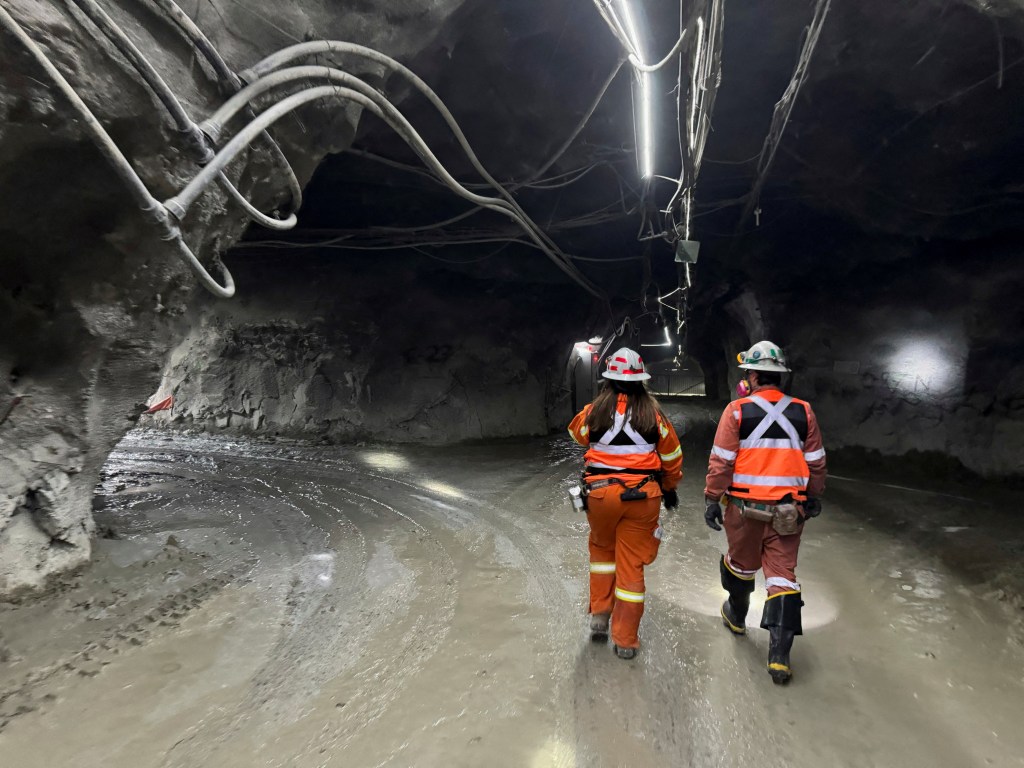
From the deserts of northern Chile comes one of the most powerful forces shaping Latin American financial markets: copper. The metal is so central to the country’s economy that Chile alone produces nearly a third of the world’s supply. When copper prices move, Chile often moves with them—its currency, fiscal accounts, and perhaps most importantly, its equity market.
For investors looking at Latin America’s emerging markets, Chilean equities present a fascinating case study of how global commodity cycles translate directly into stock market performance.
At the core of this story is Codelco, the Chilean state-owned copper giant and the world’s largest copper producer, whose dominance shapes the entire Chilean economic ecosystem. Its revenues fund government spending, influence the peso, and impact earnings outlooks for listed companies.
comprises the country’s largest publicly traded firms, spanning banks and retailers to utilities and miningThe main benchmark tracking these companies is the S&P IPSA Index, Chile’s primary equity index. The IPSA contains the country’s largest publicly traded firms, ranging from banks and retailers to utilities and mining-related companies. Because Chile’s economy is so closely tied to commodities, the index often behaves as a leveraged play on global demand for industrial metals.
This demand is increasingly tied to the global energy transition. Copper is a critical input in electric vehicles, renewable energy infrastructure, and power grids. Analysts suggest that the electrification of the global economy could significantly boost copper demand over the next decade, encouraging a sense of opportunityThat demand is increasingly tied to the global energy transition. Copper is a critical input in electric vehicles, renewable energy infrastructure, and power grids. According to analysts, the electrification of the global economy could significantly increase copper demand over the next decade.
This structural shift has important implications for companies listed in Chile. Firms such as Antofagasta plc—one of the largest copper mining companies with operations in Chile—have seen investor interest rise whenever expectations for copper demand strengthen.
But the relationship between commodities and equities is rarely linear. Chilean stocks must also contend with domestic factors, including fiscal policy, political risk, and currency volatility. Over the past few years, debates around mining royalties and constitutional reform introduced uncertainty that weighed on valuations across the Chilean market.
Yet this volatility is precisely what attracts emerging market investors. Chilean equities often trade at valuation discounts compared to developed markets, offering potential upside when global conditions turn favorable.
For portfolio managers seeking diversification away from traditional developed market equities, Latin America provides exposure to commodity-driven growth cycles. Within that universe, Chile stands out as one of the most stable institutional frameworks in the region, even as it remains deeply tied to global commodity dynamics.
In many ways, Chilean equities represent a simple but powerful macro trade: a bet on the future of copper, and by extension, on the infrastructure required to electrify the world.
For investors watching the next phase of the global commodities cycle, the Chilean equity market may be one of the most direct ways to participate.


Leave a Reply